

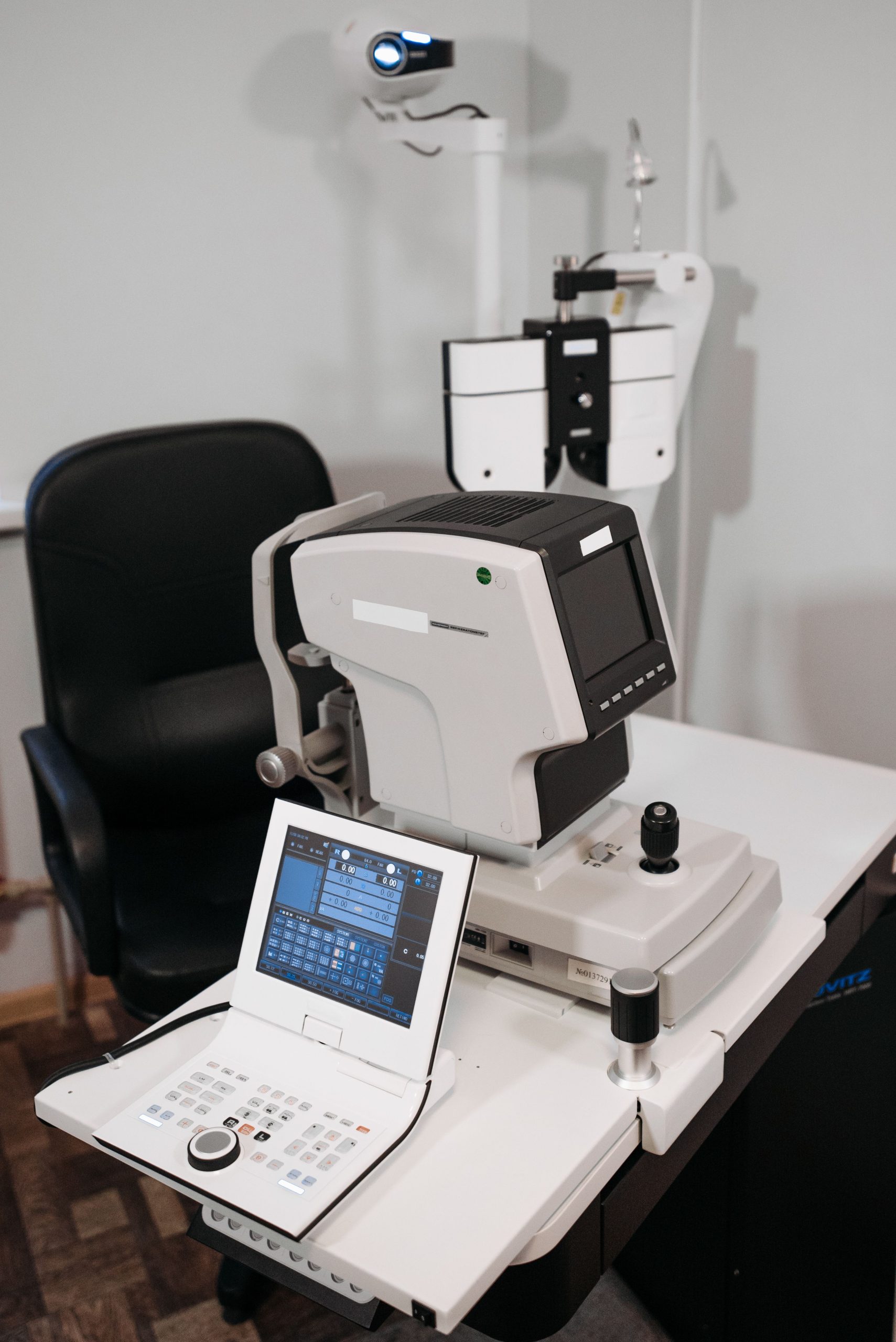
Your central vision might be perfect, and you could still be losing your peripheral vision without realizing it. Visual field testing is how we check the part of your vision most people never think about — until it's gone.
What Is a Visual Field?
Your visual field is everything you can see without moving your eyes — not just what's directly in front of you, but everything in your peripheral vision, above, below, and to each side. It's a much larger area than most people realize.
Why Peripheral Vision Loss Goes Unnoticed
Peripheral vision loss is often gradual and asymmetric, and your brain is remarkably good at "filling in" missing information using context and memory. Many patients with significant peripheral vision loss — especially from glaucoma — don't notice anything wrong until the loss is fairly advanced, because their central vision (what they consciously focus on) remains sharp.
How the Test Works
During visual field testing, you look at a fixed central point while small lights of varying brightness appear at different locations across your field of vision. You press a button each time you see a light. The machine maps out exactly where you can and can't detect light, creating a detailed picture of your peripheral vision.
What It's Used For
Visual field testing is one of the primary tools for:
- Diagnosing and monitoring glaucoma, where peripheral vision loss is often the first detectable sign of damage
- Tracking neurological conditions that can affect the visual pathways, such as certain strokes or pituitary tumors
- Monitoring retinal diseases that affect vision outside the central macula
What to Expect
The test typically takes 5-10 minutes per eye, is non-invasive, and doesn't require dilation. It does require focus and can feel a bit repetitive, but consistent results over time are what make it valuable — repeat testing lets your doctor track whether a condition is stable or progressing.
The Bottom Line
Visual field testing catches what you can't feel yourself losing. For glaucoma patients especially, it's one of the most important tools for confirming that treatment is actually working.
Have glaucoma or a family history of it? Ask about visual field testing at your next visit.
0 Comments